Video – Federal Government Funding Policies 2020

Video

Any support that home educators can take advantage of is a help. As home educators, you cannot ask to partake in funding initiatives if you don’t know about them.

Read a series of blog posts below exploring possible funding policies that may be utilised by home educators across Australia if you ask.

Ed Consult. Supporting Home Educators Across Australia.

Difference Between Home Education and Distance Education

In home education groups online, there is often confusion over what the difference between Distance Education and Home Education entails.

Distant Education is still school, but done in the home environment. A school is still responsible for delivering the subjects covered with the students sometimes expected to be online at certain periods of the day or on the phone to the teachers at specific times. The parent acts like a teacher’s aide responsible for the supervision of the educational materials emailed to the students or delivered on an online learning platform.

For this kind of education, you generally need to be home 5 days a week (or at least within internet access) during school hours of the distance education provider, so if you are interstate, you will need to keep the time change in mind.

The benefit of distance education is that the parent is absolved of developing any learning plans and registering those plans and work samples with the state education departments.

The downside to distance education is that you lose the right to choose how you spend your days. Without the freedom to go to home education meet ups, valuable social opportunities are lost. The learning opportunities provided are also still a one size fits all with minimal modifications for the individual learning needs of the student.

Distance Education really can work well for some kids, but not so great for others. It is a real choice, however in order to gain access to the state run distance education as a public student, you would need to have a medical reason or a geographical reason for not attending the local public school near you. The only other way to access distance education is through registered private providers that can be interstate and expensive. But if that is a good option for you then explore it. There will be further blogs in the future on some funding that is provided to eligible distance education students so subscribe to Ed Consult blog to learn more.

Home education on the other hand is all delivered, and developed by the parent or guardian of the student and the requirement is for that home educator to register for home education or in South Australia’s case, to apply for an exemption from schooling after enrolling in their local state school. 

The benefits of home education over enrolling in a distance education provider is that your days are you own to do with as you please. You can also tailor a personal learning plan for your child rather than a one size fits all.

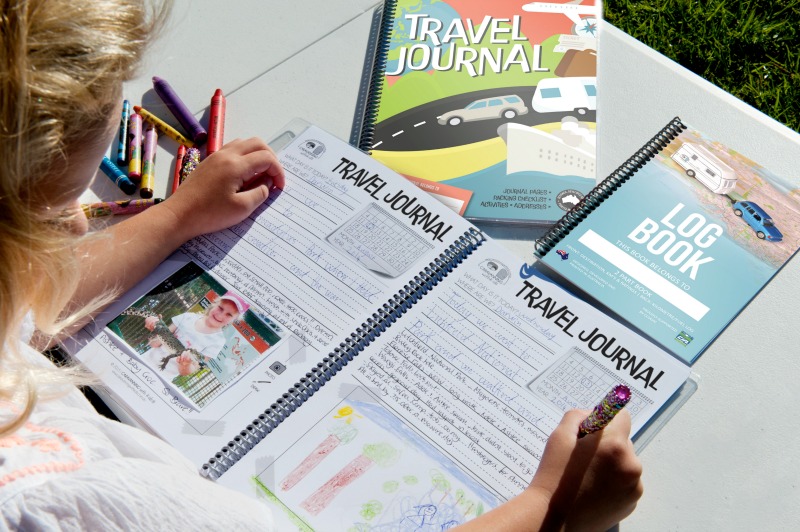
Home education is a particularly good option if you are travelling with kids. You can tailor the learning to be relevant with where you are on your journey to really help make the learning stick.

The number of family trips around Australia that I have heard being ruined by the need to be near a good internet signal to connect with their teacher, is rather high. Home education is definitely the way to go for that year long family journey around Australia. If you would like any support in developing your registration plan for your big family holiday, don’t hesitate to email contact@edconsult.com.au to explore your options together.

Ed Consult. Supporting Home Educators Across Australia.

HEN – Home Education Survey Across Australia

The latest survey run by Susan Wight of the Home Education Network also known as HEN, a national association for the promotion and support of home education in Australia.

This year’s survey saw the highest participation rates from outside of Victoria with a total of 592 respondents from every state and territory across Australia. It is an anonymous survey as no identifying information was collected. Click here to see the results yourself.

Some of the questions covered included:

  • categorising their reason for home educating. 45% stating it was a matter of philosophy and 55% as a response to school experiences.
  • The section of the survey for rating the main factor for home educating initially was for “a tailored education” 
  • whereas the main factor for continuing to home educate was “happier kids” with 223 respondents.

When looking at the different styles of education being provided at home, “Unschooling” is most popular in Victoria and Queensland, and “Project-based learning” is most popular in NSW and Queensland.

The socio-economic status of respondents showed a fairly even spread through low to high household financial status.

The occupation of respondents with the most frequency of 8% was “teacher”.

The registration status of the respondents was around 92% nationally however Queensland had the fewest registered home educators of 74% of respondents. 

More survey participants are needed to give a broader view of the actual registration status of home educators in Australia, registered and unregistered. As Susan Wight from HEN said “If we could hit 10% across the country, that would really help home educators in each state make solid arguments when advocating. Without our own stats, the government owns the narrative.”

So stay tuned for the next call for nationwide participation in this important voluntary project to support home education in Australia by the Home Education Network. Subscribe to my blog Ed Consult and this youtube channel to keep informed by clicking on the subscribe button or clicking on the links in the information below this video.

Consider joining the Home Education Network to further support the research and support projects for home educators across Australia. HEN costs only $25 per year for membership with a magazine and tonnes of online support. Click here for more information.

Find out why people home educate, and much more. Jan 2020

Ed Consult. Supporting Home Educators Across Australia.

Federal Government Funding Initiatives 2020 Blog Series #5

This is the fifth blog on Federal Government Funding Initiatives for 2020.

Here are the next excerpts from the Australian Government Department for Infrastructure, Transport, Cities and Regional Development for 2020.

Online Teaching and Learning Courses—support mathematics and phonics

The Australian Government will provide $9.5 million over four years from 2019-20 to strengthen the capacity of teachers across Australia to teach mathematics and phonics through freely available, nationally coordinated, high quality professional learning and resources. This initiative will deliver:

  • Mathematics Massive Open Online Courses (MOOCs) for teachers of Foundation to Year 10 students, provide supporting face-to-face professional learning and a repository of teaching and learning resources through an online Mathematics Hub. It aims to inspire Australian school students to learn mathematics and equip them to become our future mathematical and technological innovators.
  • Online learning and teaching resources to support phonics education for the early years of school. This initiative will provide teachers with ready access to teaching and formative assessment resources to ensure the students who need the most support to learn to read get the help they need.

The online courses and resources will be freely available to all Australian teachers and students, with resources being readily accessible to those living in rural and remote locations, and Aboriginal and Torres Strait Islander people. The mathematics and phonics online resources are designed to support teachers and provide professional learning opportunities.

Ed Consult has written to the Federal Minister for Education Hon Dan Tehan, to enquire where these resources can be found and if home educators are able to utilise these opportunities too. Stay tuned to find out more when a reply is received. This may take many months though.

See a list of other blogs in this series as they are published:

Follow this blog to find out about other initiatives that are being rolled out by the Federal Government in 2020. Perhaps it is time to start asking for a piece of the pie?

Ed Consult. Supporting Home Educators Across Australia.

Link

Whether you are pro-regulation in Australia, ambivalent, or positively against any Government interference in the home, this is an interesting read from our cousin home educators in America.

“We” Should Not Regulate Homeschooling by Kerry MacDonald Tuesday, January 7, 2020

“Modern homeschooling encompasses an array of different educational philosophies and practices, from school-at-home methods to unschooling to hybrid homeschooling.”

Ed Consult. Supporting Home Educators Across Australia.

Federal Government Funding Initiatives 2020 Blog Series #4

This is the fourth blog on Federal Government Funding Initiatives. See here for a list of other blogs in this series as they are published:

Any support for home educators in Australia is useful. Over a few posts Ed Consult will list a series of Federal Government policy changes that may be of use to home educators if we ask. Ed Consult does not endorse any of these Government initiatives. They are simply a collection of policies for 2020 that home educators could make use of for their families.

Here are the next excerpts from the Australian Government Department for Infrastructure, Transport, Cities and Regional Development for 2020.

National School Reform Agreement—Commonwealth contribution to national policy initiatives

“The Australian Government will contribute to the costs of implementing national policy initiatives developed with the states and territories to support implementation of the National School Reform Agreement. The initiatives will focus on strategic reform in areas that will have the most impact on student achievement and school improvement, to support every child to realise their full learning potential. By signing up to the Agreement, governments commit to a sustained reform effort that will drive improved student outcomes and excellence in the classroom.

The National School Reform Agreement, developed through the Council of Australian Government’s Education Council, has been informed by recommendations of the Review to Achieve Educational Excellence in Australian Schools, led by Mr David Gonski AC and the Independent Review into Regional, Rural and Remote Education This measure builds on the 2017-18 measure: Quality Schools—true needs‑based funding for Australia’s schools.”

Not very relevant to home educating parents, but it is good to know about the national education reform.

Response to the Review of the Socio‑Economic Status Score Methodology

“The Australian Government will provide a further $4.5 billion from 2018-19 to 2028-29 ($1.2 billion over four years from 2018‑19) to implement recommendations of the National School Resourcing Board’s Review of the socio‑economic status score methodology. This will help ensure funding to non‑government schools flows to students who need it most. The measure includes:

  • $3.2 billion to introduce, from the 2020 school year, a fairer and more equitable method for calculating Australian Government funding for non‑government schools, which uses parental income to measure a school community’s capacity to contribute to their school’s costs;
  • $170.8 million over two years from 2018‑19 to provide funding certainty for non-government schools for the 2019 school year; and
  • $1.2 billion over 10 years from the 2020 school year to establish the Choice and Affordability Fund to address specific challenges in the non‑government school sector, such as supporting schools in drought‑affected areas, schools that need help to improve performance, and to enable parental choice in the schooling system”

As you can read, there is substantial assistance to private schools to help enable parental choice to choose a private school. But no funding for home educated families, especially families struggling to fund the education of children with disabilities.

School Funding – Additional support for students

“The Australian Government will provide targeted additional funding from 2018‑19 over four years to support student achievement and school improvement, particularly in disadvantaged communities including those in remote and regional locations. This funding includes:

  • $9.8 million over four years for non‑government distance education schools, which provide an alternative for families where mainstream schooling is not appropriate for reasons including students’ geographic isolation, health issues or learning difficulties; and
  • $2.8 million over two years to extend the Flexible Literacy for Remote Primary Schools Program pilot into the 2019 school year, to help improve literacy outcomes by trialling flexible teaching methods.”

It would be a leap forward for home educators to be invited to the independent schools’ funding meetings. However, in the interim, it would be great if remote primary school’s could include flexible enrolments in all states rather than just a few to access specialist literacy and numeracy intensive courses if that is helpful or desirable for home educated students.

Follow this blog to find out about other initiatives that are being rolled out by the Federal Government in 2020. Perhaps it is time to start asking for a piece of the pie?

Ed Consult. Supporting Home Educators Across Australia.

Ed Consult Youtube Channel is Here!

Video

The Ed Consult Youtube channel will be another avenue of support for home educators across Australia. The videos will link to blogs at edconsult.com.au and provide information for people who prefer video to text to learn more about home education in Australia.

This first video is explaining what Ed Consult is all about. We encourage anyone who has a question or issue they would like explained or explored to email at contact@edconsult.com.au

Ed Consult. Supporting Home Educators Across Australia.

Feeling Overwhelmed? How to get your head straight as a home educator.

What if phonics is the way to go? This program says it is easy to teach but it is so expensive. But I am sure I don’t know what I am talking about. What if my 6 year old won’t be able to write an essay? What is unschooling anyway?  The dishes are not done, and the washing is getting smelly. The garden is overgrown. “Garden? I have a garden?”. 

Feeling overwhelmed about your choice to home educate your child? Let’s break that anxiety down and help put your issues back into perspective.

Here are a list of common issues that home educators in Australia face. Each area will be featured in future blogs and videos by Ed Consult:

  • Not knowing much about what a curriculum is, let alone how to implement the learning.
  • Confusion as to whether you need to follow a set of lesson plans at all
  • How will my child go to university without sitting the year 12 exams of all the other 17-18 years old around Australia?
  • How will my child socialise without school?
  • How can I teach my child if I have no experience as a teacher in a school?
  • My therapist for my child’s condition is questioning if I can provide a full educational experience.
  • Commentary from family or friends that you will ruin your child’s future by not including your child in an institutional school setting.

Be in the moment.

Too often as home educators and parents we exist in the future, planning and pressuring ourselves for the next contact with the state or territory education department or the future university graduation day with honours of our child, when they are just 6 years old. Bring your mind to the immediate present and stop drowning yourself in unnecessary future uncertainty. 

Bringing your attention to the moment everyday, even for just a minute can have profound changes on your concentration, resilience and stress levels. Put the baby in the bouncy, lock the dog in the other room, sit and close your eyes for one minute. 

Priorities, priorities.

Keep in mind you are not on display. You are in your home without an audience. You are in charge of your day, your child and a home education is a marathon with lots of rest breaks; not a sprint race.

Your priority is to help your child to be healthy, happy, life long learners, entering the world as creative problem solvers. Solving problems is the key to a happy life. How you get to that point requires many, many years. It is a skill that comes through experience and not a completed paid curriculum. 

Choose something, from somewhere and start. It doesn’t matter if the schedule you wrote with all the hopes of a new home educator, lay ignored on the floor. It doesn’t matter if the curriculum your bought is not being used (well it is an annoying waste of money, but you can always resell it). You have had your thinking time. What matters now is just choosing something to do and then doing it.

This learning activity may be a quick grammar lesson, a read aloud book, an art project, a movie session, a maths problem or a cuddle on the couch with a discussion on butterflies. Stop and be in the moment and your kids will begin to respond and peace will have a chance to descend upon your home. You will feel calmer, and more capable of thinking through where your child will go and how they are going to get there.

Start with the Australian Curriculum

If you want to have an idea of what is being taught in schools to help you frame the education that your child would have received in school, simply go to the Australian Curriculum and select the year level your child would have been assigned and read it. Go to this blog post to learn more about where to find the curriculum for your region.

In general, focus on reading, writing and arithmetic for the primary education years, and then in secondary levels focus on their interests and special skills to help them develop those skills. English is a focus for the whole of the child’s education, with maths, geography/history, and science as the core subjects. The other subject areas are at the child and educators’ discretion within the rules of your education region.

“Relax. Getting organised with homeschooling is not as important as you think it is. Relaxing, on the other hand, is more important than you know.”

Beverley Paine –

What about access to tertiary education for home educated kids?

Projecting forward to tertiary education while the child is 6 years old is a real concern for home educators and friends or family members who are not so sure about your choice to home educate. There will be extensive information supplied on this blog and through videos and extra page resources to put this concern to bed once and for all. Home educated kids have just as much access to tertiary education as a schooled child has. Subscribe to this blog to be fully informed.

What about socialisation?

Again do not concern yourself about socialisation. It is a myth that the only way to truly socialise a child is by placing them in a school 8.30 to 3.30, 5 days a week organised horizontally by age, religion, socio-economic status, or sex for 7-13 years with the same kids is the only way to successfully socialise a child. Home educated kids socialise in a vertical way with all ages, and with a broad spectrum of community members and of course their families in a far deeper and enduring way than their horizontally socialised cousins. Sign up to this blog to learn more about vertical socialisation.

Do I need to be a teacher to home educate in Australia?

You do not need to be a qualified teacher to home educate in Australia. The majority of subjects taught to budding teachers involve classroom management, cultural diversity, and education policy. What is useful is learning theory, and learning practices, which all home educators will observe over time and become proficient in developing for their own children. There is no point in wasting $20,000 on a degree for teaching our own children, however interestingly, there are many teachers who also home educate as shown in the survey by HEN in 2019. Click here for more information.

Managing doubt with family and professionals.

It can be really disheartening when you hear negative opinions from people you trust; you will be ruining your child’s future if you don’t send them to an institutional school, or that you are failing them in the management of their medical therapies if they are not left in the classroom settings.

These “well meaning” comments only come from ignorance, as those people only know the school route. They simply have no experience of just how valuable growing up as a home educated child can be. There has been fantastic research started by Susan Wight of the Home Education Network (HEN) called the Home Educated Alumni Project which follows the journeys of home educated kids into adulthood, tertiary study and professional careers in Australia. Again these topics will be discussed in future blog posts and videos, so do subscribe.

However ineffective you feel you are for your child’s education right now, it is worth a reminder that the 1 to 1 engagement that you can provide everyday is 20 to 30 times more than your child can reasonably expect to receive at school in the classroom. A little bit of attention goes a really long way. Now relax.

Ed Consult. Supporting Home Educators Across Australia.
Federal Government Funding Initiatives 2020 Blog Series #2

This is the second blog on Federal Government Funding Initiatives. See here for a list of other blogs in this series as they are published:

Any support for home educators in Australia is useful. Over a few posts Ed Consult will list a series of Federal Government policy changes that may be of use to home educators if we ask. It is also worth noting what is denied to the home educated student compared to their schooled peers.

Here are a few excerpts from the Australian Government Department for Infrastructure, Transport, Cities and Regional Development for 2020.

Increase HELP loan limit for Aviation Courses

“The Australian Government will amend the Higher Education Support Act 2003 to increase the combined Higher Education Loan Program (HELP) loan limit to $150,000 (indexed by CPI) for eligible students undertaking aviation courses at a VET Student Loans approved provider from 1 January 2020. The increased limit recognises that existing loan limits are insufficient to obtain the licences and ratings required for most practical commercial aviation employment. The increase will improve accessibility to courses and better support students and the commercial aviation sector.”

Those home educators looking into aviation as a course for their students should enquire further.

Strengthening Higher Education in Regional Australia—additional support for students and universities

” The Australian Government is providing $134.8 million over four years from 2018‑19 to strengthen higher education enrolment in regional Australia by funding additional study places, scholarships and enhanced facilities to increase accessibility. The measure includes $92.5 million over four years from 2018‑19 to support more students at five regionally focused universities: the University of the Sunshine Coast, James Cook University, the University of Newcastle, Central Queensland University and Federation University Australia. The measure also includes $42.3 million over four years from 2018‑19 to provide:

  • an additional 1,955 scholarships in 2019, valued at up to $18,000 each, for students undertaking Science, Technology, Engineering, Mathematics, Health and Agriculture tertiary qualifications—more than doubling the 1,200 scholarships previously available under the Rural and Regional Enterprise Scholarships announced in the 2017-18 Budget to provide $24.0 million over four years from 2017-18 to 2020-21 as part of the Australian Government’s 2016 election commitments;
  • support for additional Regional Study Hubs, for a total 16 Hubs across 22 locations to improve access to higher education for students from rural and remote Australia. This builds on the Regional Study Hubs announced in the 2017-18 Budget, which provided $16.7 million from 2018-19 to 2021‑22 to improve access to higher education for students from rural and remote Australia by supporting the establishment and operation of regional study hubs. Such hubs typically support regional students to study courses locally delivered by distance from any Australian university by providing greater access to study support and infrastructure; and
  • support for the development of a National Regional, Rural and Remote Higher Education Strategy, as part of the Government’s response to Emeritus Professor John Halsey’s Independent Review into Regional, Rural and Remote Education.

This builds on the Australian Government’s existing commitment of $123.6 million from 2017‑18 to 2021-22 for additional Commonwealth supported places to support expansion into regional areas. The University of the Sunshine Coast will receive funding for an additional 1,200 ongoing bachelor places in 2020, growing to 3,600 ongoing places in 2022, at a new campus in Moreton Bay. The University of Tasmania will receive funding for 1,000 ongoing places from 2019 to support the Northern Tasmanian Transformation Project. Southern Cross University will receive funding for an additional 105 ongoing places in 2019 and 210 ongoing places in 2020. These places, which are expected to grow to 315 ongoing places by 2021, will be utilised in allied health courses at a new campus in Coffs Harbour.”

Australian Apprenticeships—increased support

” The Australian Government has increased support for Australian Apprenticeships, with $27.6 million over four years from 2018‑19 to extend eligibility for the Support for Adult Australian Apprentices Incentive to apprentices aged 21 years and over (the current eligible age is 25 years and over). Extending eligibility to include apprentices aged 21 to 24 increases the support available for all Adult Australian Apprentices and provides a stronger incentive for employers to engage more adult apprentices in areas of skills needs.

To find out more about apprenticeships in Australia, click here.

Follow this blog to find out about other initiatives that are being rolled out by the Federal Government in 2020. Perhaps it is time to start asking for a piece of the pie?

Ed Consult. Supporting Home Educators Across Australia.

Time for a Bush Fire Unit Study?

Is Your Family Prepared? What can you learn together today to help you in the future?

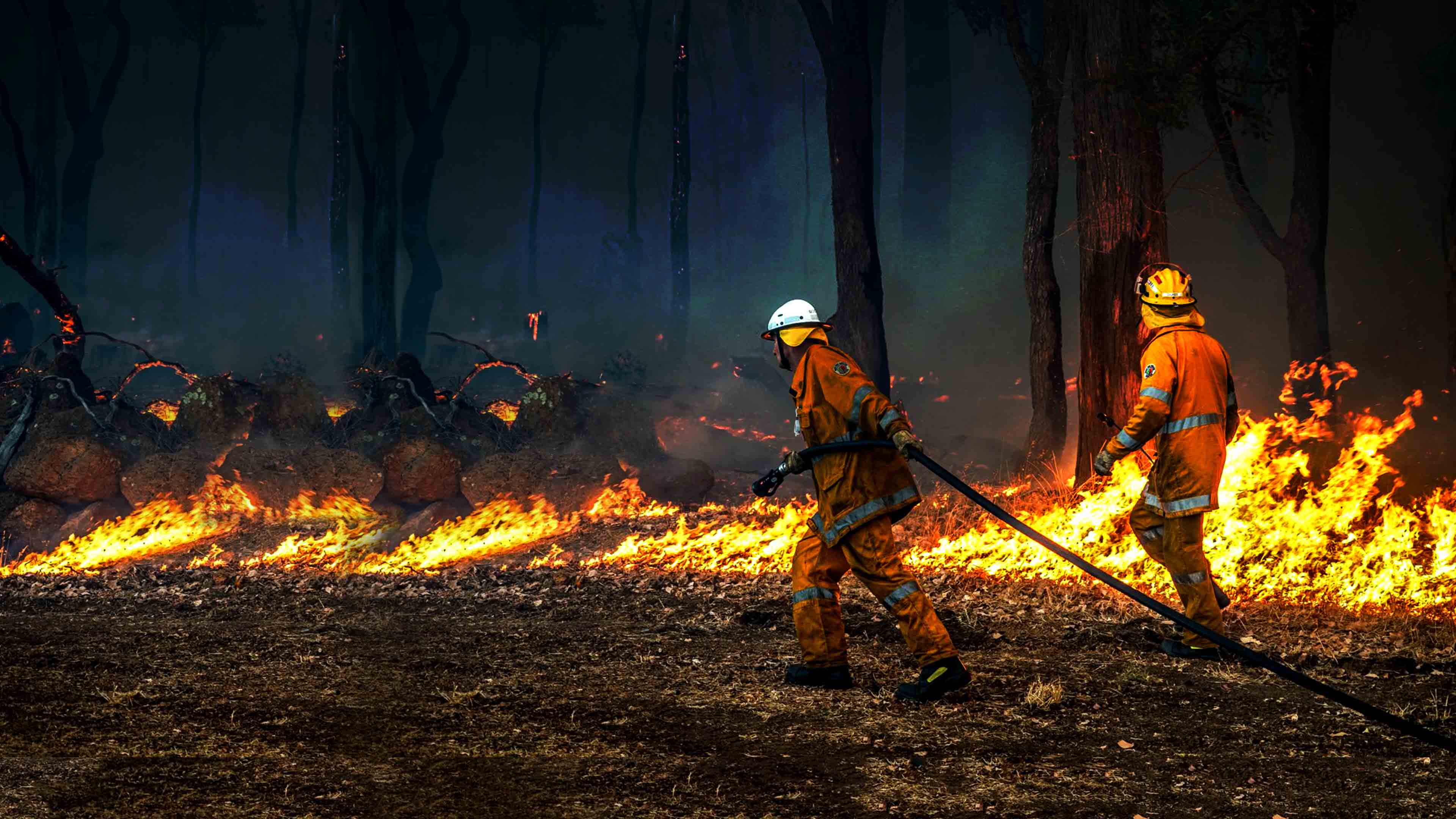
In the summer of 2019/2020, Australia is in the midst of some of the worst fire conditions with low humidity, high winds, and large fuel loads on the ground. Every other bush fire victim who has lost everything say, “you never think it will happen to you”.

Here are a list of resources and suggestions on what we should all know about bush fires and how to be prepared. Use these resources to create a unit study appropriate for your family’s circumstances. There are so many home educating families who have already lost their homes or are in the path of oncoming fire grounds. The Ed Consult family is in the same position. Ed Consult has decided to learn what we need to know so that we can make the difficult decisions; do we stay and defend or do we evacuate and is evacuation even possible?

We can all use this summer period to teach our children what we all need to know to be able to cope with the harsh Australian environment.

Where to find information

Education Resources

  • ABC BTN (Behind The News) has created an Australian Curriculum linked activity called “Bushfire Escape”.
  • This page by the NSW Rural Fire Service has a wealth of links for fire related information.
  • Click here to find youtube videos for education again provided by the NSW Rural Fire Service.
  • Here is a page to create a bushfire survival plan by the Rural Fire Service NSW that can be used by all Australians.
  • The Bushfire CRC has produced an ebook for parents on how to talk to children about bushfire preparation and safety. The ebook, “Making a bushfire plan? Involve your kids!” is based on the PhD research of Briony Towers from RMIT University. Here is a link to it’s download page:
  • ABC Education has a wide range of materials.
  • A Resource for younger children
  • From Victorian bushfire education

What if we do choose to stay and defend our home? What does that look like?

Firstly, make sure you have a radio with batteries and take some cash out of the ATM. There are large areas of the south coast of NSW that are without power and will remain so for the foreseeable future which has meant no internet, and no EFTPOS to purchase supplies without cash. If you no longer have access to mobile wifi internet, tune into your local ABC radio channel to keep up to date with the local information. See here for a link to your local ABC frequency.

Below is an excerpt from Joan Webster OMA Essential Bush Fire Safety Tips

“Although data states that 2/3 of Black Saturday [2009] fatalities died while sheltering in or near their house, research by bushfire scientists revealed that they did not die BECAUSE they were sheltering. They died because they did not know how to shelter safely.

SO WHEN THE BUSHFIRE EMERGENCY MESSAGE IS “It is too Late to Leave, You Should Take Shelter and Stay Indoors”.

WHAT SHOULD YOU ACTUALLY DO IF YOU CANNOT SHELTER IN A BUILDING?

  • Shelter behind a wall; beside a large fire resistant tree (that has no flammable undergrowth); in or beside a car; in a dam (if no vegetation is near either), in a ditch, (cover yourself with earth or blanket); crouch beneath a blankets (must be PURE WOOL) on bare ground or an already burnt area.
  • people have withstood the most catastrophic conditions.

IF YOU CAN SHELTER IN A BUILDING – Before you go inside:

  • Shut off gas and electricity at the mains.
  • Put pets inside: dogs on leash, cats in covered cages.
  • Take in outdoor furniture, doormats, hanging baskets, plastic pot plants.
  • When you are inside:
  • Make sure all doors and windows are securely shut.
  • Turn off air conditioners; cover their internal vents.
  • If windows are unshuttered, cover with blankets (must be PURE WOOL), heavy quality quilts, foil or wet towels.
  • Move flammable furniture away from windows.
  • Close internal doors to limit fire spread if embers enter and ignite inside.
  • Put on protective clothing and nose mask and drink often.
  • Keep blankets (must be PURE WOOL) handy.
  • Cool off when possible.
  • Watch the conditions outside if possible through a small window or peephole. Do not open a door or window to look outside.
  • When you are sure flaring shrubs have blackened, it’s safe to go out again. (Burning tree trunks do not generally emit killing radiant heat.)

PASSIVE SHELTERERS – This is what the children should be doing.

  • DO NOT SHELTER IN AN INNER ROOM. Not in the hallway. Not in the bath. If you shelter in ANY kind of inner room – no matter how many doors it has – you could be trapped. Embers may have ignited sub-floor or wall cavities or rafters in the ceiling space,. Flaming walls or ceiling could collapse on you. Toxic fumes from smouldering furnishings, synthetic furniture or wall linings could overcome you.
  • STAY BY A DOOR THAT EXITS TO OUTSIDE in protective clothing and with blankets (must be PURE WOOL).
  • It is vital for passive shelterers to exit as soon as the potentially killing radiant heat from flames has died down.

ACTIVE SHELTERERS – These are the people defending their property.

  • Take hose, sprayers and ladder inside with you.
  • Fill bath & troughs with water, immerse towels, roll up and place at door gaps and window ledges. Plug keyholes with play dough, blue-tack or soap.
  • Fill containers (e.g. garden sprayers) with water; put these, with dippers, mops etc, in each room.
  • Watch for invading embers. Particularly in the ceiling space, through windows, gaps under doors. Spray or hit with wet mop any sparks, embers or smouldering furnishings.
  • If any ignition cannot be extinguished, close the door of that room.
  • Maintain easy access to an exit door.
  • Never go outside during a flame front to douse an outside ignition.

EXITING

  • Exit with great care, preferably from a door that is sheltered from the wind.
  • Wear protective clothing & nose cover, cover yourself with your blanket (must be PURE WOOL), crouch, lower your eyelids and open the door gradually.
  • The quintessential bushfire survival resource is a HEAVY DUTY PURE WOOL BLANKET.
  • Covered with their blanket and with a flask of water people have withstood the most catastrophic conditions.”

You can follow Joan Webster on Facebook. Extracted from Essential Bushfire Safety Tips (CSIRO 2012), www.publish.csiro.au/pid/6969.htm (If you can’t afford to buy it – most libraries have a copy.)

Let’s prepare our children now for when they grow up and are defending their own families in the future. Take care.

Ed Consult. Supporting Home Educators Across Australia.