There is so much to learn about home education in Australia. Since the launch December 26th, 2019, there have been over 20 blog posts and just in case you missed out on some of it, here is a list so you can stay informed and up to date.
NSW In Focus – Learn about the numbers, the registration process and TAFE Update.
Some home educators report not feeling supported with their decision to home educate their children when working with some health professionals. Some practitioners are overstepping their purview enforcing their negative opinion of home education uninvited, rather than giving unbiased professional advice on the condition that is presented by the child. There have been reports that some professionals forcefully advising the child or parents to enroll in a school. It is worthwhile reminding professionals who hold this view that home education is a legal third choice in addition to government or independent schools when parents are deciding on the education for their child.
It is a reasonable premise that positive interaction and collaboration between families and practitioners is in the best interest of the child’s well being. It is important to ensure that all parties involved in children’s wellbeing understand the validity of home education, and respect a parent’s right and responsibility to choose their child’s form of instruction.
Some parents have reported about how their home education environments have helped their children with special needs.
One mum said “My daughter has ASD, SPD, generalised anxiety and is learning delayed. Homeschool has allowed me to reduce sensory overload and sit with her one on one and learn her strengths and frustrations. I can tailor her learning just to her, using any resources that will fit, rather than trying to make certain resources fit her.”
One experienced mother’s advice to other home educating parents working with professionals was to:
“Tell the [Health Professional] you home educate, that is a non negotiable thing that will not be changing, and can they help and advise you within that context…Only once did I encounter a person who said she could not work with my child unless we would put him in school, and … we knew not to go back [to them].”
There were also families that have enjoyed positive experiences with their therapists such as:
“We have been fortunate enough to find supportive medical and allied professionals who have acknowledged that home education is the best choice in our case. It has been worth seeking out the good ones.”
“My son’s therapists weren’t happy about me homeschooling but respected my decision nonetheless. Now, they praise it as they have seen the change in my boy..”
An online resource has emerged called “Home Ed Friendly professionals” to help families find services in every state and territory to help their children be the best they can be and still respecting home education as their choice for their children’s education. Make sure to add to this project any professionals who have contributed positively to your home education experience.
Another mother stated:
“I have dealt with a lot of health professionals and don’t mind at all explaining what home education is. However, I do mind having to defend those choices to professionals who overstep the mark.”
Ed Consult. Supporting Home Educators Across Australia.
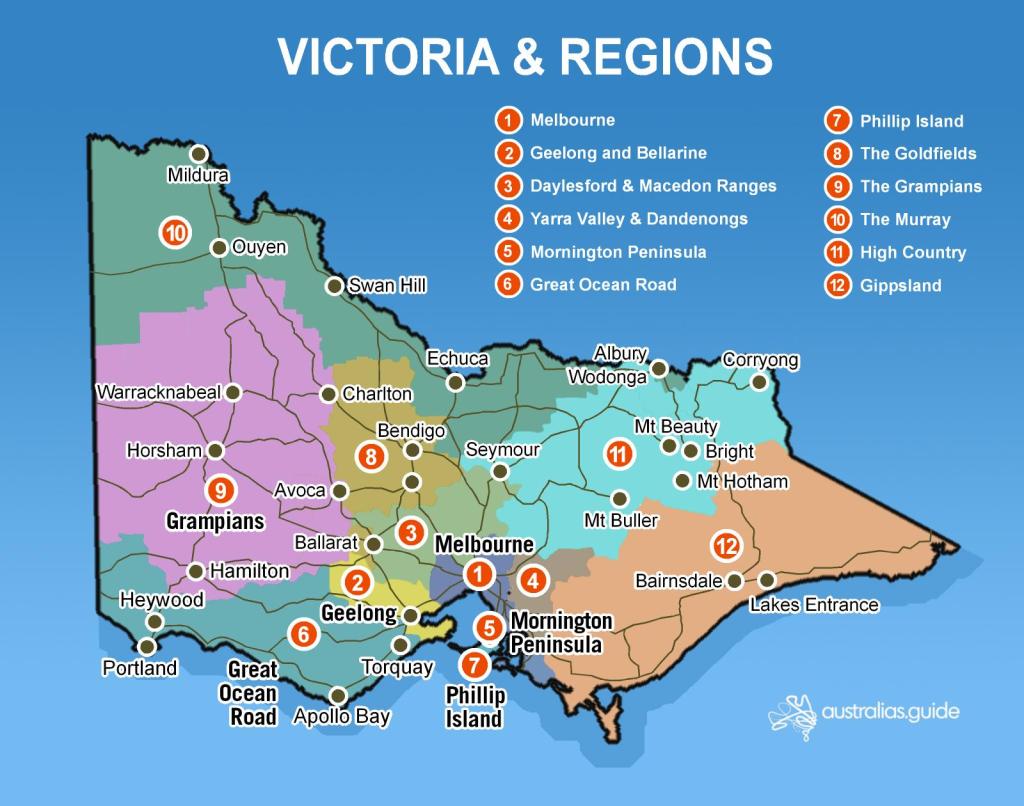
There was more mention of home education in Victoria recently talking about the rise in the home education registration in 2019. With 1,108 registered in Victoria in 2013 to 3,232 in 2018 saw a 192% increase. Today, 6425 children were home educated in 2019.
“Parents are best placed to make decisions about the education of their children and Daniel Andrews must ensure that parents who make the choice to educate their children at home are supported.” Victorian opposition education spokeswoman Cindy McLeish.
Click on the link below to read the article in The Herald Sun newspaper in Victoria.
At the current rate of increase of home education registration across Australia, the number of students registered for home education will exceed 1% of the total student population within two years. This increase is chasing the American home education population of over 3% of all students in the USA.
Ed Consult. Supporting Home Educators Across Australia.
Democratic Labour Party MP Rachel Carling-Jenkins urged the Andrews government back in 2015 to provide taxpayer-funded vouchers to help the growing number of homeschooling families pay for stationery, curriculum resources, computers and internet access.
Democratic Labour Party MP Rachel Carling-Jenkins urged the Andrews government back in 2015 to provide taxpayer-funded vouchers to help the growing number of homeschooling families pay for stationery, curriculum resources, computers and internet access.
Click on the link below to read the article in The Age newspaper.
It really takes experienced politicians who have home educated their own children to stand up and speak on behalf of home educators and their needs. Ms Carling-Jenkins knows personally how much it costs to choose to educate children at home.
“Opponents of homeschooling cite concerns about the standard of education children receive without a qualified teacher; the lack of socialisation some children might face; and the potential for religious extremism to be imposed. Proponents say it gives children the chance to excel by catering to their individual needs, particularly if a child has a learning disability or is being bullied at school.” The Age Farrah Tomazin
Ed Consult encourages home educators across Australia to write to any politician who talks about support for home educators. However, Ed Consult would never garner votes for any individual politician on that basis alone because their other political agendas may become divisive in our large and wonderfully diverse community.
Unfortunately, in the recent past a home educator linked a national association to the suggestion that home educators should vote in the Federal elections 2019 for a particular small party Candidate because of their support for a section of the home education community in the NSW parliamentary enquiry into home education in NSW in 2017. This candidate failed to secure a seat. This voting direction caused pain and concern within our LGBTQI Community and the larger home education community as well.
Lobbying for an issue or support for home education is quite OK and open to anyone to do. This is distinct from lobbying for a candidate’s election who is supportive of only a section of the home education community. Linking a diverse home educating community with a socially and politically divisive individual candidate in any parliament has had the effect of dividing and destabilising the home education community in Australia.
Dr Carling-Jenkins said she would continue to lobby Premier Daniel Andrews to give parents “a fair go”.
A voucher suggestion is a wonderful start.
Ed Consult. Supporting Home Educators Across Australia.
The NSW Minister for Skills, John Barilaro, announced in 2017 that home educated students 15 years and over registered with NESA as secondary students could enrol in Smart and Skilled funded courses at TAFE and private RTOs in NSW. This greatly reduces the fees to access these courses and ensures that this remains a viable pathway to work or further education.
The fees that students pay vary widely depending on a variety of circumstances. Students with a disability do not have to pay any fees. Students in low income households (in receipt of the full Family Tax benefit A or youth allowance), or who are Aboriginal, have low fees. If students do not fit into these categories their fees will be more – up to several thousand dollars depending on the course. TAFE has a fee calculator on their website that you can use to help determine what the fees will likely be.
It is no longer a requirement for registered home educated students to have a year 10 certificate for admission to Smart and Skilled funded NSW TAFE courses. If you are asked by TAFE or the private RTO for a year 10 certificate, explain that the student is registered for home education and meets the requirements for eligibility for a Smart and Skilled funded course.
There have been some stories in 2018-2019 where home educated kids were being rejected as not eligible for Smart and Skilled funded placements. This was usually down to poorly trained staff and the best ways to deal with a difficult gatekeeper is to ask:
If that doesn’t work, ask to speak to the supervisor.
If that doesn’t work, contact Smart and Skilled directly on this link and tell them the branch of TAFE or the RTO you are dealing with and get the answers your child deserves.
If you have experienced discriminatory practices in your state or territory with regards to higher education access, please email at contact@edconsult.com.au or leave a comment below this blog or the YouTube video.
Ed Consult. Supporting Home Educators Across Australia.
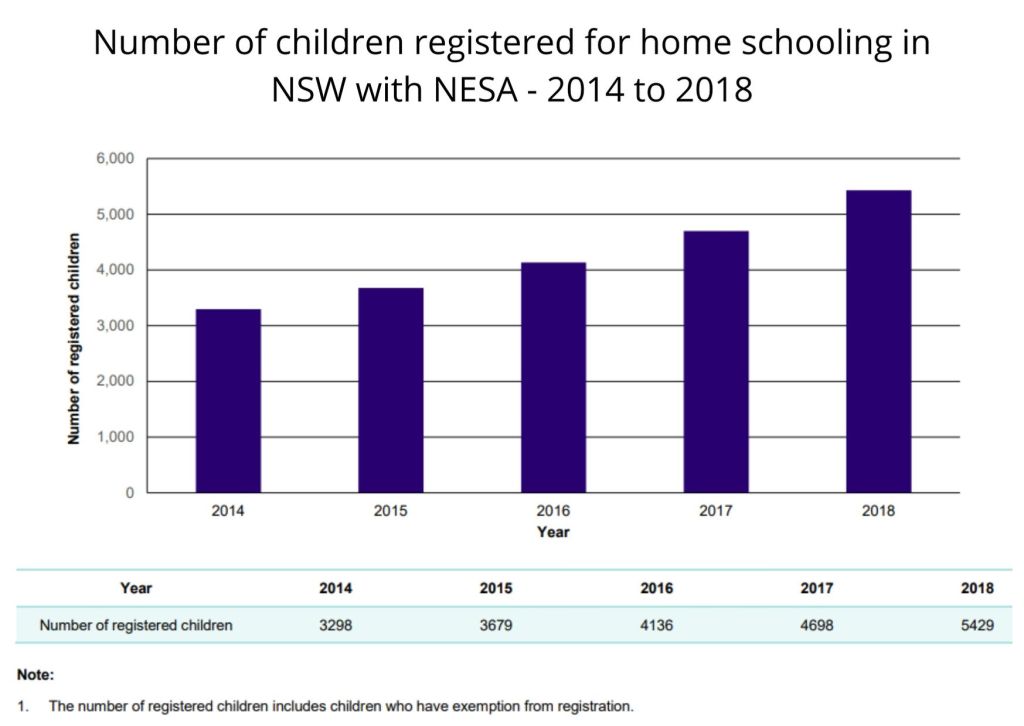
The latest numbers of students registered for home education are from a report March 2019 from NESA (NSW Education Standards Authority). From 2014 with 3298 to 2018 with 5429 home educating students. The number of unregistered students is unknown but anecdotal evidence suggests it could be a similar figure.
“New South Wales has experienced a 24% growth between 2014-2016, following a dip after the introduction of new regulations in 2014. At the time, there were 3,327 students registered for homeschooling with the NSW Board of Studies [now NESA], which has now grown to 4,100 respectively.
This graph is interesting as it shows the percentage of home educators who are being given shorter registration periods. Using 5,429 as the 2018 figure, the students registering for the first time who got the full 12 months initial registration was 78% with renewal of registration receiving the maximum time period of 24 months was up at 87%.
It would be interesting to see what plans or reporting is being rejected or given shorter registration periods by NESA so that we can all learn what not to do when registering.
How many schools would it take to educate 5,429 students in NSW?
Not home education.
Approximately 105 Primary School classes just like the one above, and 90.5 high school classrooms to accommodate all the home educated students with a 50/50 spread of primary to high school students. This is just a representation of what that many students may actually look like with the average primary school class of 26 students and high school class of 30 students. Financially, at an average of $16,000 per student for tuition (not accounting for additional learning support funding or infrastructure funding) would cost the Federal Government approximately $86,864,000 if all home educated students were to enrol next week.
If we were to acknowledge the 1/4 of all registration applications in NSW that choose to state that they home educate with a child with special needs, including levels 1-6 of $6,400 to over $60,000 per student per year, this could equate to a total funding for all home educated students to over $115,000,000 per year.
Just as soon as the latest numbers from NESA on registration for home educated students are available they will be shared with you here. Don’t forget to subscribe.
Ed Consult. Supporting Home Educators Across Australia.
Registering for home education in NSW is straight forward and easy. If you know how.
You will need to follow a few steps as listed below in order to successfully register for the maximum first registration period of 1 year. Upon re-registration in 12 months time, you can apply for a two year maximum registration period. NSW home educators register through NSW Education Standards Authority also known as NESA.
How to make the big bad government Authorised Person smile on your home visit. Only joking!
Step 1 – Alert the authorities that you are leaving the reservation
Go to the NESA homeschooling webpage and download Form 1 for initial registration. Fill one out for each child separately and then email them back signed. An AP (Authorised Person, usually a teacher) will then call you to make an appointment for the purposes of sighting your children and to read a written program for each child.
The program can be as simple as cutting and pasting the stage statements from each Key Learning Area (KLA), and then list any resources you intend to use to cover those skills sets in the stage statements.
I wouldn’t write any education philosophies down. Stay away from mentioning unschooling or natural learning and save yourself an unnecessary headache. Just list resources or activities that will tick what each stage statement will need.
You only need to register for primary or secondary school. You do not need to list a grade level. This gives you the freedom to alter the skills levels for each KLA to suit where your child is upto. If they are more advanced in Mathematics you may select the stage statement for stage 3 instead of stage 2. This is your opportunity to truly tailor your child’s education. Click here for all the stage statements in a single document for Early Stage 1 to Stage 5. Stage 6 is separated due to the volume of subjects and different requirements in the Curriculum. https://educationstandards.nsw.edu.au/…/stage…
If you are using work books, your list of resources under the stage statements for English and Maths KLAs may look something like this:
Mathematics stage 2 – Targeting Maths grade 3, Life of Fred, online multiplication games.
English – All About Spelling level 4 – 5, First Language Lessons, Writing with Ease, The Hobbit and The Lord of the Rings for literature, readers from the library, Audio books, speech at home school group.
If you are using a child led approach or unschooling, you will still need to write something down and that may look like this:
English – Public speaking at the home school meet-up, writing a journal, creating a recipe book, creating an ad for selling a bike on Gumtree, memorising poetry from a nursery rhyme book, writing some short stories, doing some copy work, keeping a word index book of words learnt with meanings, reading list appropriate for their interest and age.
Mathematics – focusing on using measuring equipment especially in cooking, online maths games, chalk and cement for practice problems, building with lego, sorting colours and quantities and following instructions, shopping adding up the purchases, planning a family trip with public transport, playing math based card games like Gin Rummy, playing board games like Ticket to Ride or Rummikub, singing along with the times table song disc.
It really isn’t very hard. Do the simplest paperwork such as listing of resources above is all you need to write. Be polite to the Authorised Person and then get the government out your front door. What you do in your home is your business. The longest registration period you will get for the initial registration is 12 months. Some home educators have really great APs and they are a welcome resource during home visits, but some have reported APs who expect school at home setups and can be highly rigid in interpreting their jobs. Do let Ed Consult know if you have had an experience such as this at contact@edconsult.com.au
Step 3 Get re-registered for your next home education adventure together
In 12 month’s time you print off the second form on the above mentioned NESA webpage and then have some work samples for each KLA, a photo album, diary entries or some form of record keeping of their learning and the new plan for the next two years. You are not required to compare your registered plan with what work was actually reported on. The AP is simply noting that you have a plan that is consistent with the NSW Curriculum. If you do nothing that you planned to do, that doesn’t matter at all. Just report what was done. Not hard really.
What if I don’t register?
Under the Education Act (see my other blog on this topic) in NSW you are required to register with NESA to home educate. If you are not registered, the only thing that will happen is that you will be asked to register with NESA. If you persist to fail to comply with the above steps, then the end worst case scenario is that you could be charged with “educational neglect”. This is very very rare and reserved for those who repeatedly refuse to register under the act.
If you are reported, simply register your children. Children who have never attended any schools are not on any lists. Children who unenroll from a school will be on the list of the school or a home school liaison officer and you can expect a phone call enquiring why your children are skipping school without a note.
Just say what the government wants to hear.
Yes we use the NSW Curriculum
Yes we keep records of the learning
Yes I considered my child’s learning needs and interests
Yes we have resources and space available to facilitate the learning of my child.
Job done.
Ed Consult. Supporting Home Educators Across Australia.
Any support that home educators can take advantage of is a help. As home educators, you cannot ask to partake in funding initiatives if you don’t know about them.
Read a series of blog posts below exploring possible funding policies that may be utilised by home educators across Australia if you ask.
In home education groups online, there is often confusion over what the difference between Distance Education and Home Education entails.
Distant Education is still school, but done in the home environment. A school is still responsible for delivering the subjects covered with the students sometimes expected to be online at certain periods of the day or on the phone to the teachers at specific times. The parent acts like a teacher’s aide responsible for the supervision of the educational materials emailed to the students or delivered on an online learning platform.
For this kind of education, you generally need to be home 5 days a week (or at least within internet access) during school hours of the distance education provider, so if you are interstate, you will need to keep the time change in mind.
The benefit of distance education is that the parent is absolved of developing any learning plans and registering those plans and work samples with the state education departments.
The downside to distance education is that you lose the right to choose how you spend your days. Without the freedom to go to home education meet ups, valuable social opportunities are lost. The learning opportunities provided are also still a one size fits all with minimal modifications for the individual learning needs of the student.
Distance Education really can work well for some kids, but not so great for others. It is a real choice, however in order to gain access to the state run distance education as a public student, you would need to have a medical reason or a geographical reason for not attending the local public school near you. The only other way to access distance education is through registered private providers that can be interstate and expensive. But if that is a good option for you then explore it. There will be further blogs in the future on some funding that is provided to eligible distance education students so subscribe to Ed Consult blog to learn more.
Home education on the other hand is all delivered, and developed by the parent or guardian of the student and the requirement is for that home educator to register for home education or in South Australia’s case, to apply for an exemption from schooling after enrolling in their local state school.
The benefits of home education over enrolling in a distance education provider is that your days are you own to do with as you please. You can also tailor a personal learning plan for your child rather than a one size fits all.
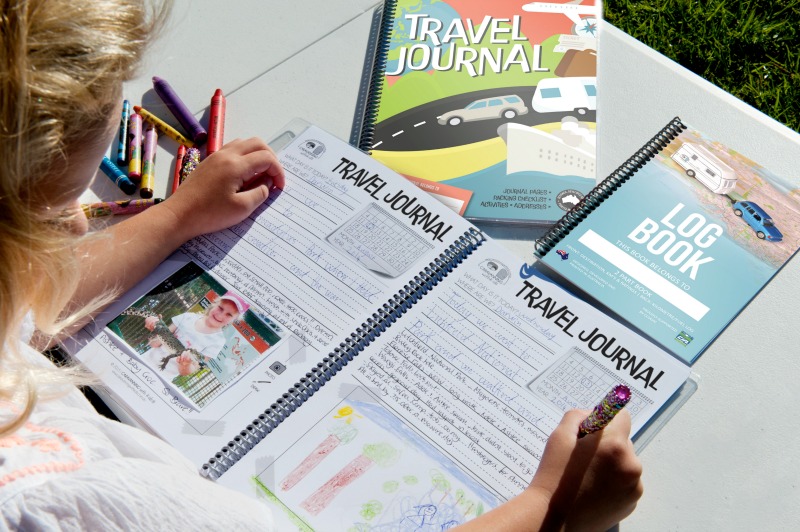
Home education is a particularly good option if you are travelling with kids. You can tailor the learning to be relevant with where you are on your journey to really help make the learning stick.
The number of family trips around Australia that I have heard being ruined by the need to be near a good internet signal to connect with their teacher, is rather high. Home education is definitely the way to go for that year long family journey around Australia. If you would like any support in developing your registration plan for your big family holiday, don’t hesitate to email contact@edconsult.com.au to explore your options together.
Ed Consult. Supporting Home Educators Across Australia.
The latest survey run by Susan Wight of the Home Education Network also known as HEN, a national association for the promotion and support of home education in Australia.
This year’s survey saw the highest participation rates from outside of Victoria with a total of 592 respondents from every state and territory across Australia. It is an anonymous survey as no identifying information was collected. Click here to see the results yourself.
Some of the questions covered included:
categorising their reason for home educating. 45% stating it was a matter of philosophy and 55% as a response to school experiences.
The section of the survey for rating the main factor for home educating initially was for “a tailored education”
whereas the main factor for continuing to home educate was “happier kids” with 223 respondents.
When looking at the different styles of education being provided at home, “Unschooling” is most popular in Victoria and Queensland, and “Project-based learning” is most popular in NSW and Queensland.
The socio-economic status of respondents showed a fairly even spread through low to high household financial status.
The occupation of respondents with the most frequency of 8% was “teacher”.
The registration status of the respondents was around 92% nationally however Queensland had the fewest registered home educators of 74% of respondents.
More survey participants are needed to give a broader view of the actual registration status of home educators in Australia, registered and unregistered. As Susan Wight from HEN said “If we could hit 10% across the country, that would really help home educators in each state make solid arguments when advocating. Without our own stats, the government owns the narrative.”
So stay tuned for the next call for nationwide participation in this important voluntary project to support home education in Australia by the Home Education Network. Subscribe to my blog Ed Consult and this youtube channel to keep informed by clicking on the subscribe button or clicking on the links in the information below this video.
Consider joining the Home Education Network to further support the research and support projects for home educators across Australia. HEN costs only $25 per year for membership with a magazine and tonnes of online support. Click here for more information.
Find out why people home educate, and much more. Jan 2020
Ed Consult. Supporting Home Educators Across Australia.








 Ed Consult